
Why Devil Mask Studio doesn’t use Generative AI
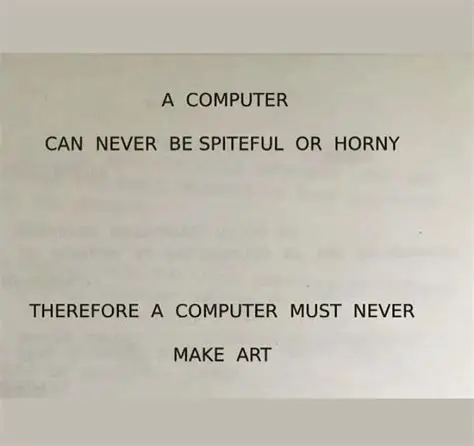
AI is everywhere. The platforms and systems that we use are increasingly integrating Generative AI tools, pushing users towards Generative AI workflows, and in some cases actively punishing users who opt out. Most folks teaching shibari, producing events, and promoting their work aren’t professionals, or are balancing second and third jobs to care for themselves and their loved ones. Time is short, resources are tight, and we’re all trying to figure out how to avoid being banned by Meta.
None of these are good reasons to use Generative AI in its current form; here’s why.
First and foremost: the thing we do is about humanity. It’s about messiness. It is ineffable and hard to quantify. It resists neat categorization into marketing verticals (much to Nora’s chagrin) and can’t be flattened into universalities. That’s why it is inherently valuable. That’s why we do this, regardless of profit motive or community building. We are doing what we do with and for ourselves and other people.
Generative AI is anti-community. It is anti-connection. It is anti-Shibari. It is anti-human.
The Environmental Impact
The backbone of Generative AI functionality is specialized data-centers. These high density buildings utilize specialized graphics processing units (GPUs) and tensor processing units (TPUs) to train, deploy and run resource intensive models like ChatGPT. These facilities are purpose built, resource intensive and cannot be easily repurposed. They are unitaskers on a grand scale.
The projects themselves are so large and take up so much space that they are more effectively measured in energy consumption than square footage. With an average size of two football fields, each data-center represents a huge footprint, physically and ecologically. Two projects underway in AZ and LA will each be over 4m sqft. and consume gigawatt hours of electricity.
How much energy do they use? According to the IEA, “A typical AI-focused data centre consumes as much electricity as 100,000 households, but the largest ones under construction today will consume 20 times as much.” That’s 2 million households, or a city bigger than Phoenix, AZ, the 5th biggest city in the US. And multiple of those facilities are currently under construction.
How much water do they consume? Utilizing that much electricity certainly creates a lot of heat, just think of the size of your laptop and how frequently the fan comes on. A typical large-scale data center of this type can consume up to 5 million gallons of fresh water per day. For scale, that’s about 312,500 average home showers. This is in a time where the US municipal water infrastructure is so poorly maintained that Flint, MI spent from 2014-2019 without clean drinking water and nearly half of Native American households lack access to clean and reliable water supplies.
Even if we set aside the land usage, power consumption, and (literal) evaporation of potable water, the method of creating these data centers isn’t sustainable. The speed at which new GPUs are created cannot match the speed at which they are deployed. The server racks that each of these facilities are designed to house changes with every generation of GPU. The full development lifecycle for this type of project is 3-6 years while compute capability in GPUs doubles every 1.4 – 1.7 years. By the time these bespoke, single use centers get built, they’ll need to use obsolete GPUs or be modified.
Model Training Is Property Theft
Large Language Models’ (LLMs) capacity to analyze word context are built upon vast amounts of training data. They are fed books, articles, and other media to create context around words that allow them to predict a probable next word or pixel based on the data they’ve ingested.
Where does the training data come from?
This is the funny thing: the companies won’t tell us entirely. They do, however, reference that they’ve used only information “freely and openly accessible on the internet” for model training purposes. As anyone who’s ever had a photo repurposed or reposted without consent can tell you: there is a difference between making something visible for free and making something free for commercial use.
Much of the content we enjoy – and access for free online – is monetized in ways that are less obvious than ad reads on your favorite podcast. Whenever you view your favorite YouTuber’s video, you are creating a record of your patronage. Those “views” are used as a metric, both by YouTube to determine the level of monetization that a creator has access to, and by advertisers when deciding where to use their social marketing budget.
If we land in the world that Google, ChatGPT, et al are pitching (the “zero-click internet”), we’ll eventually ingest all of that information via interaction with an LLM, rather than at its source. But there is a cost to producing (and hosting) data on the internet – a cost currently borne by the folks creating all of this data and content we enjoy, and balanced by the revenue they generate via the mechanisms above. But if we ingest everything via LLM, what happens to that revenue? As views dwindle and ad spends move from individual creators to the companies creating LLMs, the very data LLMs are trained on will cease to exist online. We’ll exist in a content ouroboros – a world where the only source for data is what LLMs previously recorded or what it can glean from other models.
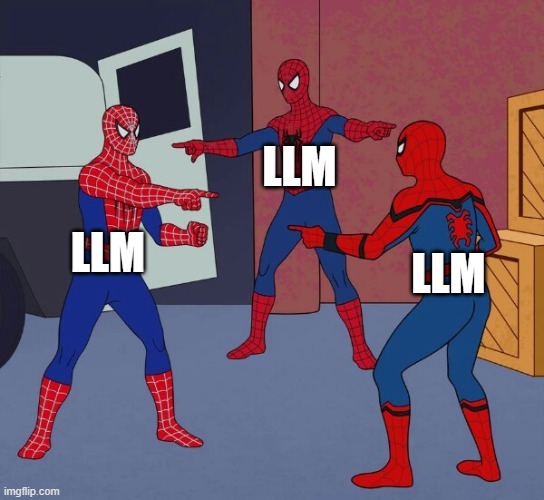
Whenever you use generative AI, you subvert the “view” mechanism. YOU didn’t go to the site, YOU didn’t view the content, YOU didn’t create the record of its usefulness that helps to compensate the creator. The model ingests the content once and regurgitates it without returning to the page, ad infinitum.
That ingestion is theft. They’ve stolen, and continue to steal, every minute of every day.
What happens to a cost deferred?
Even if you aren’t swayed by the environmental impact of datacenters or the fact that training these models is theft, the fundamental costs associated with generative AI won’t hold. The actual cost of using Generative AI far exceeds the cost of hiring a human to do this work.
Anthropic logged a net operating loss of over $80bn USD in the first half of 2026 – greater than the annual Gross Domestic Product of most nations.They have multi-year computing cost commitments approaching $900bn USD and would need to increase their 2026 YTD revenue by 27x to meet those commitments.
Where would that revenue come from? Either increasing the cost of your utilization OR the replacement of your job through the creation of Artificial General Intelligence (AGI). Here’s the problem: No matter how much you improve the LLM structure, that doesn’t guarantee the creation of AGI. To steal a metaphor, if you breed horses to be faster and faster, there isn’t a point where one will give birth to a locomotive.
At some point you will either pay more, or have less. Their hope is that by then, you’ll be so dependent, there will be no other options.
What We Do Instead
We hear, over and over, that you have to use AI to generate fliers because there simply isn’t enough time, enough energy, or enough cash to DIY or commission them. But, buried in that argument is a pretty big assumption: that you need a slick, splashy image for your event. Why do we think that? Have we asked? Are we listening to what our customers (or communities) are telling us?
Generative AI is a death spiral for marketing because it’s all the same. Throw as many of your emails and blog posts as you want into an LLM, it’ll still return text with the same few telltale phrases and syntax errors. Make your prompt as specific as you want, it will still return an image with a particular glossy uncanniness to it – something that feels slick and detached and inhuman. You’ve compromised your values for a product that isn’t you.
Marketing is hard work. But it’s also a big part of what keeps the lights on, salt-lemon candy stocked, and loaner rope bin full.
Here’s how we’ve built a sustainable (and one person) marketing operation without leaning on Generative AI:
- Know What Your Product Is
The past three years have taught us that people respond to the same things in marketing that bring us to rope: honesty, specificity, and humanity. People respond to specificity – to both who we are and how we do things – because that specificity gives them something to latch onto. This is core to how we think about our marketing and what our ‘product’ is: we aren’t selling secret mystical knowledge that nobody else has, our product is the unique way we break down concepts and make them accessible.
Every piece of marketing collateral should point back to that. AI could never. - Use the Right Tools
95% of our marketing graphics are built in Canva using templates we’ve built and images we capture ourselves, photos we shot in collaboration with a local photographer, or stock images from Unsplash, which explicitly prohibits AI generated content.
Why does that matter? Because in a world where every AI flyer looks the same, we have our own visual language. - Figure Out What’s Important
I spend a lot of my time thinking about analytics and pipelines. Where do our customers come from? What do they care about? Is one source of traffic more valuable than another? Do events sell better with a banner image or is a text header sufficient?
Even if you ignore all of the moral and practical issues above, it still takes time and effort to sit down, write a prompt, and sift through the generated outcomes. Generative AI is not effortless, and I want to make sure that every ‘calorie’ I spend on marketing can be justified with actual numbers. So: can you point to clear benefits from Generative AI usage? I sure can’t.
There’s an upper limit to what I can do – no matter how good my systems and tooling are. Data is essential because it helps us spend our limited time and resources effectively. - Build Systems
We’re a three-person operation. While I may have the same twenty-four hours as Beyonce, I certainly don’t have her administrative empire supporting my work. That means I need to build systems and decide where it makes sense to spend my time. After all, every hour spent in Canva is an hour I’m not tying for a session (and vice-versa).
So, I build systems. All of our class fliers are built on the same template, which means I swap out images and details, rather than designing each one from scratch. Our class descriptions are all pre-written, so I can drop them into our event listings and graphics rather than writing new copy every time. We post via Buffer, which means that I can block out time to get all our class posts queued, rather than handling it piecemeal throughout the month. - Stare At Your Computer and Sigh
Ennui is an important part of the creative process.