
Consent culture isn’t killing your rope scenes.
There’s been a thread of conversation recently around the ways that “consent” gets in the way of what makes rope scenes magic: trust, vulnerability, authenticity, presence…whatever word we use for encountering the core of ourselves. And, while trust and space for the unanticipated (both external and, in Avgi Saketopoulou’s phrasing, the “opacity” of the self1) are essential, I think it is both rhetorically sloppy and dangerous to blame “consent” writ large for what amounts to rope catching a case of The Bureaucracies.
Let me explain.
We Love a Worksheet
It is very tempting to use a checklist (or virtual form) to negotiate. These forms offload both the work and vulnerability of negotiation, suggesting a wide menu of potential forms of interaction while requiring very little of us: I’m not suggesting that I might want to shove a filthy sock in your mouth, the checklist is. These checklists reduce consent to the product of an interaction – a clear, finite output – rather than an ongoing state. Put the correct inputs in and consent comes out. And consent means you get to do rope.
This isn’t to wholesale trash negotiation forms – I think they can be useful starting points and I use them for tying sessions (which are inherently transactional) – but it is to point out that they are a supplement, not a substitute, for honest conversations about our desires. Part of being a responsible pervert is being brave enough to risk being told “no,” to your face. As much as the prospect may feel horrifying, I promise that the world continues to turn. I promise that not only is “no,” survivable, it is a thing that has the miraculous capacity to build trust and relationships where ongoing consent is present. Bureaucracy kills that.
I would argue this isn’t an issue with consent at all; it’s an issue that arises when we substitute bureaucracy for consent. And that substitution is driven by convenience, but it’s also driven by fear.
I think there is a genuine fear that, if when we fuck up, it will destroy our lives (or at least our access to kink spaces). But:
You Sound Like an Incel
There is no way to frame this kind of bureaucratic risk mitigation in a way that doesn’t sound at least a little like “oh you know, women are always trying to trap men…”
My brother sister sibling in Christ, why are you playing with someone that you believe might try to rake you over the coals if something goes wrong? Or, more commonly, with someone that you do not know well enough to trust that they will read you generously?
Vulnerability is scary. Trust takes time to build. And if the thing that we are looking for is immediate play, particularly play at a high intensity, then we might be tempted to substitute bureaucracy for one (or both) of those components. But the speed with which we decide to act doesn’t make it consent’s “fault” when our experiences are subpar, transactional, or result in harm. We have made our proverbial bed, now it is time to lie in it.
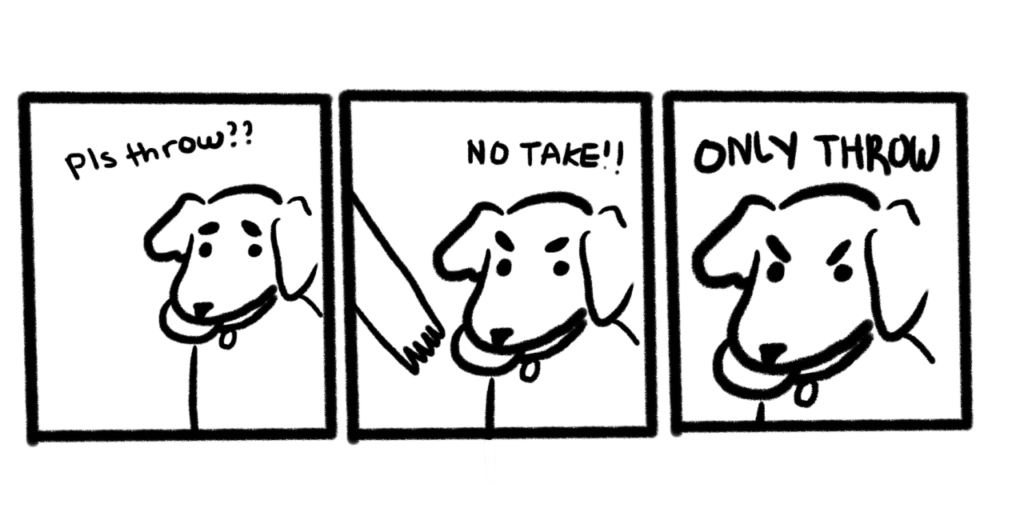
I Am the Most Responsible Kinkster For I Fully Know Myself
A brief digression: sometimes when I am lifting weights, I cry. Or become impotently furious with my spotter, who has done nothing other than be helpfully present and encourage me. But something bubbles up from my “opacity” and surprises me. I encounter rage within myself, unexpected and unlooked for. And, while my own beliefs about somatics and the currents of the body offer me a why, they do not take away the surprise.
In many ways we are seeking the same things with rope, at least for those of us who are playing to find intensity, pain, and the elusive ‘seme’ – suffering. We are, to paraphrase Rope Tales, fishing at night: casting bright lights onto dark water to see what swims up. I particularly like this metaphor because it focuses on fishing (or tying) as an act of discovery, not a hunt for a particular type of fish (or reaction). It is curious and responsive in the ways that it invites a response, and also requires a hell of a flotation device (here: trust).
To play in this way we must trust that we – individually and together – can navigate whatever surfaces from the dark waters of our play. We must trust that we are moving as a team towards some shared harbor, and that at the end of the voyage we will sit together inside, where it is warm, and tend to each others’ windburn and scraped hands.
If we view consent as the static output of a process and guarantor of a good (or at least medium) time, then a negative internal response must be reflective of a breach of consent, rather than something large rising up from the depths with a corona of bubbles (or tears).
In some ways risk aware play is an oxymoron: we must simultaneously be knowledgeable about our play and understand that our knowledge is never complete. That we will always be surprised, sometimes in ways that are terrible but sometimes in ways that nourish our practice for years. And that surprise does not mean that we have breached consent (or had ours broken), even if our response is to haul in the lines and make for the shelter of shore. Unless, of course, we have made the incredibly dangerous promise of a fully knowable and unsurprising scene2.
So, I would offer you this: knowledge cannot replace consent. Bureaucracy cannot replace consent. Consent is in the doing.
what is consent?
Weirdly, I think the answer comes from Ridley Scott:
“I [take you] to be no other than yourself. Loving what I know of you, trusting what I do not yet know, with respect for your integrity and faith in your abiding love for me. In all that life may bring us, I pledge my love.”
Which is not to say that I think we need to be ready to marry everyone that we tie with, but that this speaks so concisely to both knowledge and trust. Enthusiasm for who we believe this person is and trust that as our experiences unfold, we will move through it with mutual care.
I believe that part of consent is a gesture towards the beyond. It is a mutual understanding that our knowledge and scripts are incomplete and sometimes shit happens. Overwhelmingly, what turns “shit happens” into real harm is mismatch, either mismatch between what we each believe will happen or mismatch between what we have agreed will happen (if we have talked about it at all) and what we actually do.
So, Why Spend 1000 Words Defending “Consent?”
In short: I am deeply suspicious of a push to reject consent culture within rope while the broader world grapples with deepfake revenge porn, Grok’s generation of CSAM, and ‘rape academies’ that get 62m web hits in a month.
This is not an abstract argument about phrasing amongst friends – it is an argument about the actual practices and frameworks we engage with to seek pleasure (and pain). And within these arguments – made publicly by journalists and educators – I see strong echoes of the arguments that “asking for consent ruins the mood,” which dominated conversations around sexual violence on college campuses in the mid 2010s.
“Yes means yes.”
What may feel like a meaningless aphorism now was a radical thing to say less than a decade ago. To understand the moral panic surrounding a shift to affirmative consent models in policy, let me offer you two snippets from 2014:
“[It] will technically deem a large proportion of sexual encounters to be rape, but prosecutors will only enforce it if there is an accusation. And since most, and possibly nearly all, sexual encounters will legally be rape, then accusation will almost automatically result in conviction.”
–California’s Radical College-Sex-Law Experiment by Jonathan Chait3 at The Intelligencer
“Critics of using affirmative consent as the standard seem to act as though there is some other type of consent that people are actually using when they have sex. But in the absence of affirmative signs of consent, then all we’re left with is a concept of “negative consent”–an assumption that people are in a perpetual state of consenting to sex with anyone at all times unless indicated otherwise.”
–No, California’s New Affirmative Consent Law Will Not Redefine Most Sex As Rape – Maya Dusenbery at Feministing
There are living, working educators (hello!) who remember a time when everything, including sexual contact, was ‘on the table’ if a bottom didn’t explicitly rule it out during negotiations. Even then, it was considered something of a permissible lapse if the person tying you forgot and put a few digits inside. Many of us spent years fighting for this kind of affirmative consent to be taken seriously within rope and the fact that it is now taken for granted (at least in some spaces) is genuinely a mark of success. But there was a time when a number of very prominent voices in rope education argued that “consent” would prevent everyone from having the scenes they wanted to have.
As much as we might sometimes feel like we’re floating in our own little countercultural bubbles, rope communities exist within dominant cultures. What we tell our students and audiences is filtered through the world that we’re all living in. And we are living and teaching and writing in a world that is increasingly hostile to sexual agency and pleasure, particularly the agency and pleasure of anyone outside of a very narrow, affluent framework.
So: when we blame “consent” for getting in the way, we should pay very close attention to whom our voices align with.
Come back next month for our follow-up: How to Survive Asking For What You Want.
- Saketopoulou, Avgi. Sexuality Beyond Consent. New York: New York University Press, 2023. http://openlibrary.org/books/OL38070218M/Sexuality_Beyond_Consent. ↩︎
- I want to particularly highlight the danger of promising someone a predictable experience, here. We are on the hook for the agreements we make during negotiation, even (particularly) when we promise something it is not within our power to deliver. ↩︎
- You may be familiar with Chait’s name – his current beat is being a weirdo about trans issues, see: Jonathan Chait vs Transgender People ↩︎